

Rio das Ostras in a few words
Rio das Ostras is located in the Lakes Region, on the coast of the state of Rio de Janeiro, between Cabo Frio and Macaé. It was the fastest-growing city among the three tracked by the portal in the region: IBGE's 2022 Census recorded 156,491 residents, compared to 105,676 in the 2010 Census, a rate of 3.33% per year. IBGE's estimate for 2026 is 168,626 inhabitants.
The municipality covers 228 km² and 28 km of coastline, according to the city hall. The Municipal Human Development Index (IDHM) of 2010, the most recent from Atlas Brasil, was 0.773, in the high range and above the state average of Rio (0.761). Unlike Cabo Frio and Búzios, Rio das Ostras is more of a primary residence city than a vacation destination: two out of three homes were occupied by permanent residents in the 2022 Census.
| Indicator | Rio das Ostras | Source |
|---|---|---|
| Population (2022 Census) | 156,491 | IBGE |
| Estimated population (2026) | 168,626 | IBGE |
| Area | 228 km² | IBGE, 2022 |
| GDP per capita (2023) | R$67,735 | IBGE |
| IDHM (2010) | 0.773 (high) | Atlas Brasil (PNUD, Ipea, and FJP) |
| Occasional use homes | 17.1% | IBGE, 2022 Census |
| Beaches | 15 | Rio das Ostras City Hall |
| Intentional homicides in 2025 | 20 victims | ISP-RJ |
| Macaé Airport | 30 km | OpenStreetMap route |
What living in Rio das Ostras is like in summer and winter
The 2022 Census shows a city with vacation use, but lower than its neighbors: 17.1% of homes (15,016 properties) were for occasional use, compared to 33.4% in Cabo Frio and 7.0% on average across the state. In summer, the Costazul and Centro waterfronts receive visitors; outside peak season, the city continues with more than 160,000 residents. Macaé Airport is 30 km away. The average salary for formal workers was 3.6 minimum wages in 2021, above the state average of 3.4, according to IBGE.
The climate is warm and dry. There is no INMET climate normal for Rio das Ostras or Macaé; the closest is Iguaba Grande, in the Lakes Region. In the 1991 to 2020 normal for that station, average highs from December to February reach 31.3 °C and lows 23.2 °C (summer averages calculated by us using monthly normal values). From June to August, highs average around 26.3 °C and lows 18.1 °C. Annual rainfall is 893 mm, with November as the wettest month (112 mm) and August as the driest (35.5 mm).
Beaches and neighborhoods
The city hall lists 15 beaches along 28 km of coastline. Among them:
- Costazul, the busiest, a 2.3 km ocean beach with a pier, popular among surfers and fishermen (State Secretariat of Tourism);
- Remanso, 200 meters long, near Praça da Baleia, with calm waters, great for children;
- Centro and Bosque, with trees, kiosks, and restaurants;
- Cemitério, a cove with fishing boats and one of the best sunsets in the city, according to city hall;
- Boca da Barra, at the mouth of the Ostras river, with calm waters;
- Joana, between two rocky cliffs, and Areias Negras, small with dark sand;
- Enseada das Gaivotas, quiet and wide, good for walking;
- Itapebussus, 2 km long, near the lagoon of the same name;
- Mar do Norte, about 15 km from Centro, one of the largest in the region;
- Abricó, Tartaruga, and Virgem. City hall notes that Abricó and Tartaruga lost beach area due to sea encroachment.
Between Praça da Baleia, featuring a 20-meter humpback whale sculpture, and Praia da Joana lies the Monumento dos Costões Rochosos, a coastal rock stretch turned ecological reserve, according to the State Secretariat of Tourism. The city is also famous for the Rio das Ostras Jazz & Blues Festival.
The most sought-after neighborhoods for property buyers are:
- Costazul: the busiest oceanfront, with the pier, Praça da Baleia, and Remanso.
- Centro and Boca da Barra: the historic waterfront, featuring Centro, Cemitério, and Boca da Barra beaches.
- Extensão do Bosque: neighborhood home to Hospital Grand Mater.
- Enseada das Gaivotas: featuring one of the quietest beaches in the city, with a wide sandy strip.
- Mar do Norte: about 15 km from Centro, adjacent to the beach of the same name.
The page for off-plan apartments in Rio das Ostras shows the updated catalog count by neighborhood.
Safety: what the numbers say
The Rio de Janeiro Public Safety Institute (ISP-RJ) recorded 20 intentional homicide victims in Rio das Ostras in 2025, compared to 22 in 2024, 25 in 2023, and 32 in 2022: four consecutive years of decline. Divided by the population estimated by IBGE, the 2025 rate stands at 11.9 per 100,000 inhabitants, below the state average of Rio in the same year (15.9 per 100,000). It is the lowest rate among the three cities covered by the portal in the Lakes Region.
Violent lethality, which combines homicide, robbery resulting in death, bodily injury followed by death, and deaths from law enforcement action, was 24 victims in 2025, or 14.2 per 100,000 (state: 21.9). From January to August 2026, there were 9 intentional homicides, compared to 12 in the same period of 2025; part of the 2026 data remains preliminary.
Ipea's Atlas da Violência uses a different database (death certificates from the Ministry of Health) and records 29.39 per 100,000 in 2022, the latest year by municipality. The difference from ISP-RJ comes from the source: the Atlas counts by death certificate and by the victim's municipality of residence.
Quality of life and services
Healthcare. The National Registry of Healthcare Establishments (CNES) lists in Rio das Ostras the Hospital Municipal Dra. Naelma Monteiro da Silva and the Pronto Socorro Municipal, both in Parque Zabulão providing 24-hour public healthcare (SUS), alongside the UPA 24h Valmir Hespanhol in Âncora. In the private sector, CNES lists Hospital Grand Mater (Extensão do Bosque) and Centro Médico Integrado Santa Teresinha (Costazul).
Schools. In INEP's 2025 Ideb index, the public school system in Rio das Ostras scored 6.2 in early elementary grades, above the state average (5.8), 4.7 in late elementary grades, matching the state, and 3.7 in high school. The top-performing public schools in late elementary were E. E. Municipalizada Fazenda da Praia (5.7), E. M. Nilton Balthazar (5.6), and E. M. Professora Rosângela Duarte Faria (5.4); in high school, C. E. Cinamomo scored 4.6.
Sanitation. In the 2022 Census, 61.8% of residents had sewage connected to the central or rainwater network.
Work and income. GDP per capita was R$67,735 in 2023, and the average formal salary was 3.6 minimum wages in 2021, the highest among the three portal cities in the region.
Driving distances. Starting from city hall, Macaé Airport is 30 km away (about 40 minutes without traffic) and Cabo Frio International Airport is 58 km away. Cabo Frio is 51 km away and Búzios is 48 km away. Galeão Airport is 177 km away (about 2 hours and 40 minutes) and Downtown Rio is 171 km away. Routes were estimated via OpenStreetMap, which is not an official government source; highway travel is typically slower during summer and holidays.
Real estate market: what official sources show
The FipeZap index does not cover Rio das Ostras, and there is no other official property price index for the city. Therefore, this guide does not cite average square meter prices.
What official data shows is a city that grew nearly 50% between the two censuses, with formal income above the state average and a primary residence profile. For investors buying to rent out, this creates options for long-term annual rentals in addition to vacation rentals. Past appreciation does not guarantee future appreciation, and each development depends on location, developer, delivery timeline, and initial pricing.
What to consider before buying off-plan in Rio das Ostras
- Exact location. Costazul, Centro, and neighborhoods further from the coast feature vastly different pricing.
- Coastal erosion. City hall records loss of beach area in Abricó and Tartaruga. For beachfront properties, inquire about coastline conditions in that section.
- Long-term vs. vacation rentals. Check condominium rules to confirm if short-term rentals are permitted, and calculate HOA fees, property taxes (IPTU), management costs, and furnishings. Read our vacation rental guide.
- Payment schedule and adjustments. Understand down payment in installments, INCC adjustment (INCC, Brazil's national construction cost index), and costs of buying off-plan property, including local ITBI (ITBI, the municipal property transfer tax).
- Development registration. Off-plan sales can only take place after the development registration (registro da incorporação) is filed at the Real Estate Registry (Law 4.591/1964). See how to choose an off-plan development.
For buyers living outside Brazil, the guide on buying property in Brazil while living abroad explains tax IDs (CPF), power of attorney, and remote signing.
To explore options in Rio das Ostras with price tables, floor plans, and payment plans, schedule an online investment consultation or an in-person visit.
Run the numbersHow much is the ITBI in Rio das Ostras? Calculate it with the city hall's rule3% ITBI in Rio das Ostras, with the city hall sourceOpen the calculatorPhotos

Tour boat in front of Ilha dos Trinta Reis, in Rio das Ostras. Photo: MTur Destinos / Wikimedia Commons, public domain (Thiago Freitas - MTUR) 
Ilha das Pombas seen from the coastal rocks of Rio das Ostras. Photo: MTur Destinos / Wikimedia Commons, public domain (Thiago Freitas - MTUR) 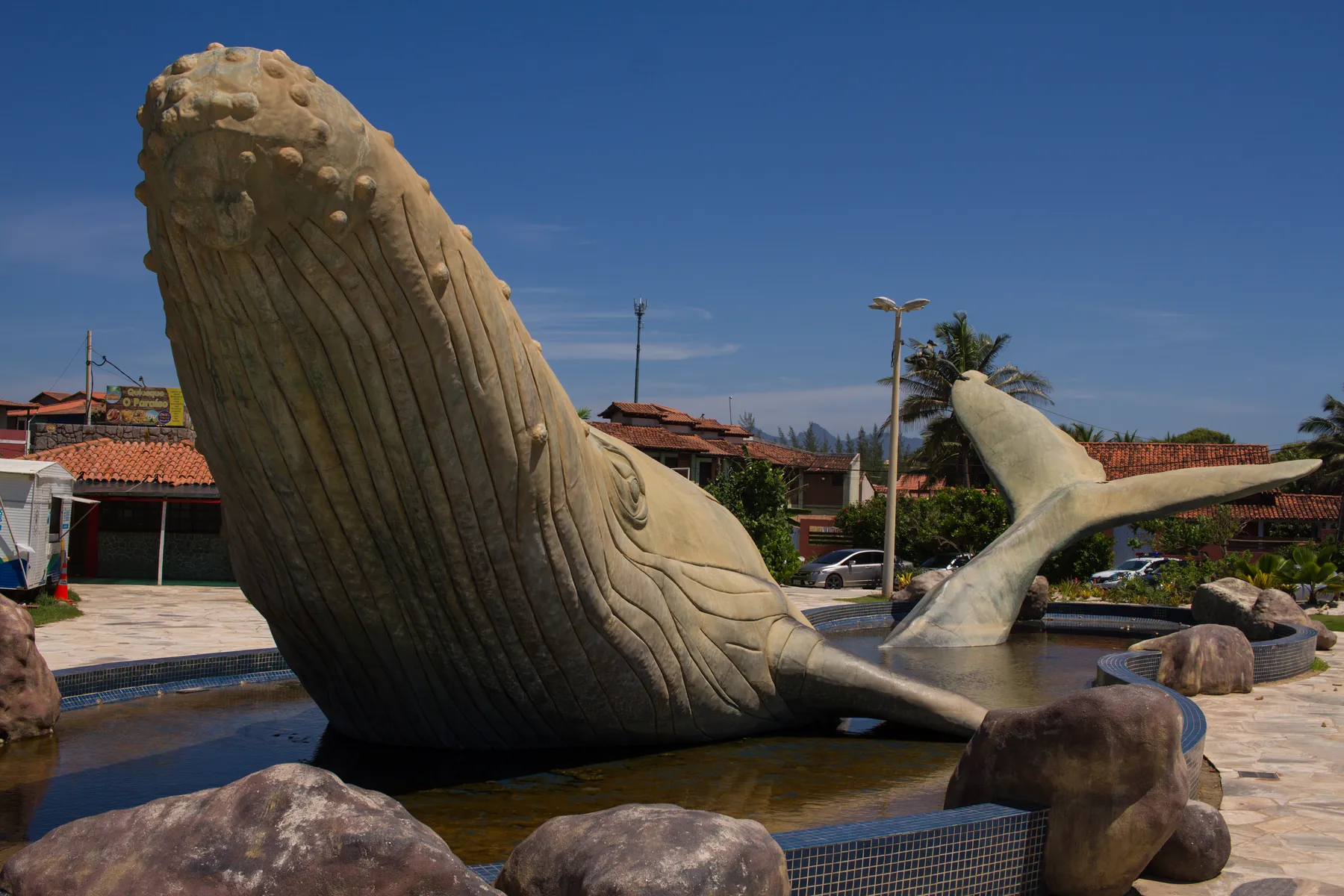
Whale sculpture at Praça da Baleia, in Rio das Ostras. Photo: MTur Destinos / Wikimedia Commons, public domain (Thiago Freitas - MTUR) 
Praia da Boca da Barra, in Rio das Ostras. Photo: MTur Destinos / Wikimedia Commons, public domain (Thiago Freitas - MTUR) 
Wooden pier and fishing boats in the Boca da Barra area, in Rio das Ostras. Photo: MTur Destinos / Wikimedia Commons, public domain (Thiago Freitas - MTUR) 
Sunset at Praia do Centro, in Rio das Ostras. Photo: Carlos Augusto Bastos / Wikimedia Commons, CC BY-SA 4.0 
Sandy strip of Praia do Mar do Norte, in Rio das Ostras. Photo: Yasmin Rollemberg / Wikimedia Commons, CC BY-SA 3.0 
Ferry boat next to the rock at Igrejinha beach, in Rio das Ostras. Photo: ClaraPPaula / Wikimedia Commons, CC BY-SA 3.0
Guide updated on October 4, 2026. Every figure has its source and date.