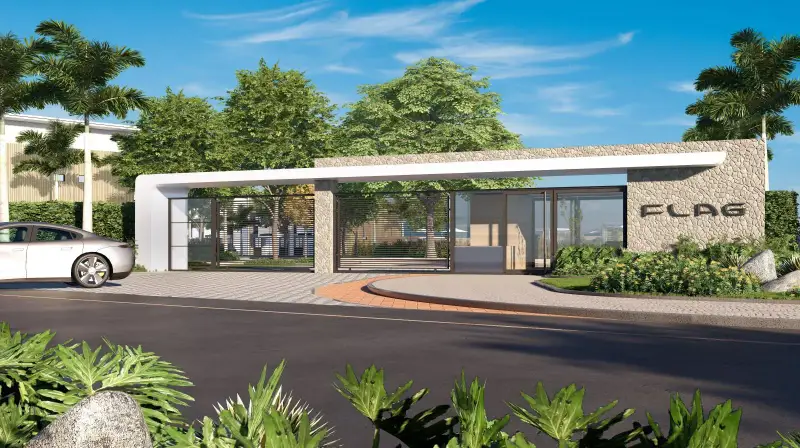
Under construction


Looking for property in Cabo Frio? See the city's new launches and buildings under construction.
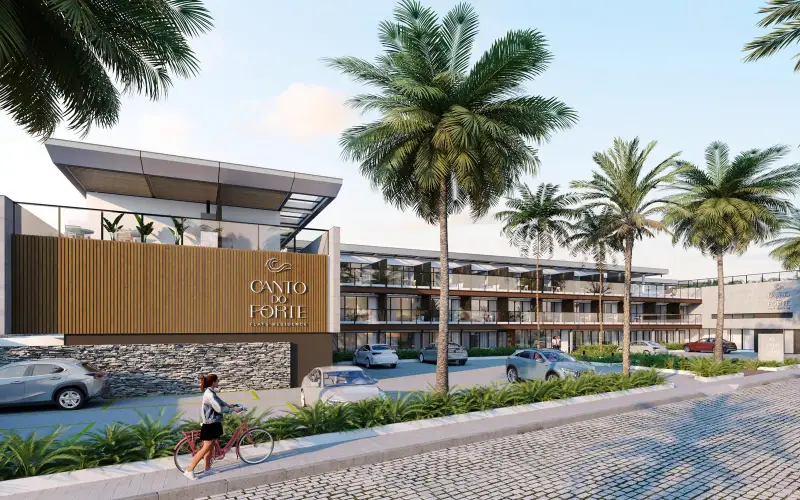
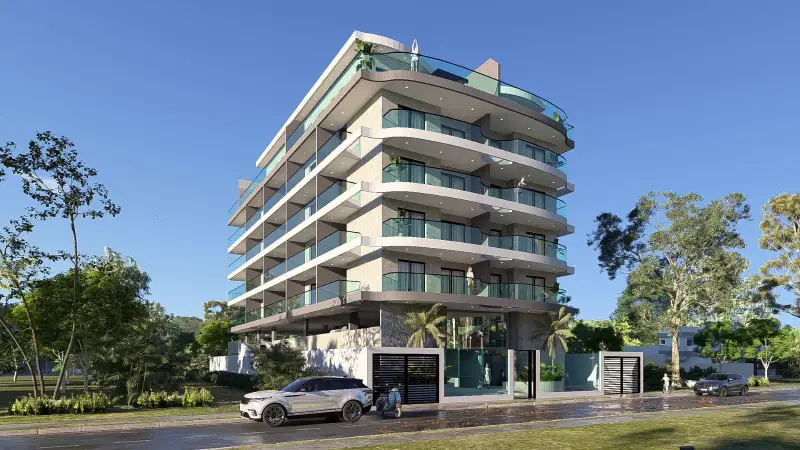
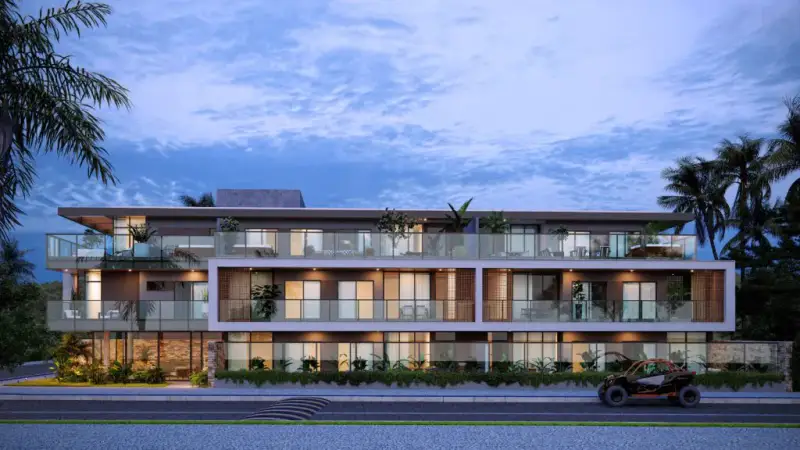
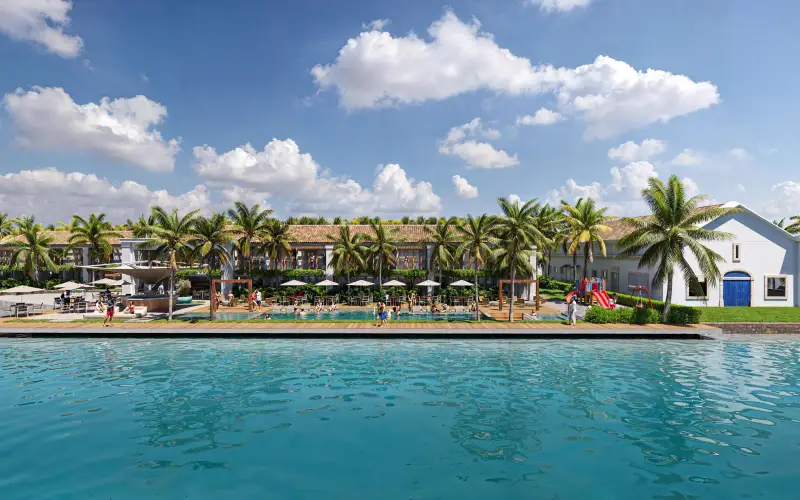
Cabo Frio is located in the Lakes Region (Região dos Lagos) on the coast of the state of Rio de Janeiro and is the most populous of the three cities tracked by this portal in the region. IBGE's 2022 Census recorded 222,161 residents, and the IBGE projection for 2026 is 236,772. Between 2010 and 2022, the population grew by 1.48% per year in a state that experienced virtually flat growth over the same period (0.03% per year).
The municipality covers 413.4 km² and encompasses the city surrounding the Itajuru Channel, the coastline of Praia do Forte, Peró, and the district of Tamoios. The State Secretariat of Tourism highlights Cabo Frio as the seventh oldest city in Brazil and the fourth oldest in the state. Its Municipal Human Development Index (IDHM) in 2010, the most recent in the Atlas Brasil publication, was 0.735, falling into the "high" range.
| Indicator | Cabo Frio | Source |
|---|---|---|
| Population (2022 Census) | 222,161 | IBGE |
| Estimated Population (2026) | 236,772 | IBGE |
| Area | 413.4 km² | IBGE, 2022 |
| GDP per capita (2023) | R$76,361 | IBGE |
| IDHM (2010) | 0.735 (high) | Atlas Brasil (UNDP, Ipea and FJP) |
| Occasional-use dwellings | 33.4% | IBGE, 2022 Census |
| Intentional homicides in 2025 | 63 victims | ISP-RJ |
| Cabo Frio Airport | 10.7 km | OpenStreetMap route |
| Rio de Janeiro (Downtown) | 154 km | OpenStreetMap route |
Cabo Frio is a resort town, and census data clearly reflects this: one out of every three homes in the municipality (33.4%, or 51,925 properties) was vacant because it was a beach house or second home. Across the state overall, that average is 7.0%. During the summer, the beachfront at Praia do Forte, Passagem, and Peró gets crowded; outside peak season, the city returns to the steady pace of its more than 220,000 fixed residents.
The climate is drier than the rest of the Rio de Janeiro coast. INMET does not maintain a climatological baseline directly in Cabo Frio; the closest station is in Iguaba Grande, also in the Lakes Region. Based on the 1991 to 2020 baseline for that station, the average daily high from December to February is 31.3 °C (88.3 °F) and the average low is 23.2 °C (73.8 °F). From June to August, daily highs average around 26.3 °C (79.3 °F) and lows around 18.1 °C (64.6 °F). Annual rainfall is 893 mm, which is relatively low for the Southeast coast: November is the wettest month (112 mm) and August is the driest (35.5 mm).
According to the official page of the State Secretariat of Tourism, the main beaches in Cabo Frio are:
Among the top neighborhoods requested by buyers and featured in our catalog are:
The catalog page for off-plan apartments in Cabo Frio shows an up-to-date count of available inventory by neighborhood.
The Public Safety Institute of Rio de Janeiro (ISP-RJ) recorded 63 victims of intentional homicide in Cabo Frio in 2025, compared to 97 in 2024 and 65 in 2023. Based on IBGE population estimates, the 2025 rate translates to 26.4 per 100,000 inhabitants, above the state average for Rio de Janeiro in that same year (15.9 per 100,000, with 2,746 total victims). In 2024, with 97 cases, the local rate stood at 40.7 per 100,000.
ISP-RJ also publishes violent lethality figures, which combine intentional homicide, robbery resulting in death, bodily harm followed by death, and police intervention deaths: Cabo Frio recorded 74 victims in 2025, or 31.0 per 100,000 (compared to 21.9 for the state). From January to August 2026, 37 intentional homicides were registered, down from 42 during the same period in 2025; some 2026 figures remain preliminary.
The Atlas da Violência compiled by Ipea uses a different baseline (death certificates from the Ministry of Health) and registered 31.96 homicides per 100,000 inhabitants in Cabo Frio in 2022, the latest year analyzed by municipality, compared to 21.9 across the state.
When evaluating these statistics, keep in mind that crime rates are calculated strictly using permanent residents: seasonal visitors are not counted in the population base. Furthermore, local safety conditions vary considerably from one neighborhood to another, which citywide figures do not reflect.
Healthcare. The National Registry of Healthcare Establishments (CNES) lists the Hospital Universitário Reitor Hésio Cordeiro (operated by UERJ) in Jardim Flamboyant, alongside several public hospitals with 24-hour public SUS coverage: Hospital São José Operário (São Cristóvão), Hospital da Mulher and Hospital da Criança (Braga), and Hospital de Tamoios. The Hospital Santa Izabel (run by Irmandade de Santa Izabel) also accepts public SUS patients, while Casa de Saúde Cabo Frio provides private care. The city features two 24-hour emergency clinics (UPA) located in Parque Burle and Tamoios.
Education. In the 2025 INEP Ideb index, Cabo Frio's public school system scored 5.3 in early primary grades, 4.0 in late primary grades, and 3.6 in high school. The top-performing public school in late primary grades was E. M. Profª Márcia Francesconi Pereira (4.8 score); for high school, C. E. Praia do Siqueira and Escola Agrícola Municipal Nilo Batista tied for the highest score at 4.2.
Sanitation. In the 2022 Census, 60.9% of residents lived in housing connected to the public sewer or stormwater network.
Employment and Income. GDP per capita reached R$76,361 in 2023. According to IBGE, the average salary for formal sector workers in 2021 was 2.0 times the minimum wage, below the state average of 3.4.
Driving Distances. Cabo Frio International Airport is approximately 10.7 km away (a 17-minute drive without traffic). Galeão International Airport in Rio is 160 km away (about 2h35), while Downtown Rio is 154 km away (about 2h25). Búzios is 23 km away and Rio das Ostras is 50 km away. Macaé Airport is 78 km away. Driving routes are estimated using OpenStreetMap (not an official government source); seasonal traffic during summer months and national holidays will increase drive times significantly.
The FipeZap index, which tracks asking prices per square meter across major Brazilian markets, does not index Cabo Frio (in Rio state, it only tracks Rio de Janeiro city and Niterói). As a result, this guide does not state average prices per square meter, as listing portal aggregators are not considered official statistical sources.
Official data paints a clear demographic profile of Cabo Frio: a population growing at 1.48% per year between censuses, one-third of housing units dedicated to secondary seasonal use, and an international airport located directly within municipal limits. For investors interested in short-term rental strategies, high seasonal demand is an advantage, but it carries seasonality risks since occupancy peaks during summer months and national holidays. Past performance does not guarantee future capital appreciation, and every real estate development must be evaluated on its individual location, developer track record, timeline, and entry pricing.
For international buyers residing abroad, our guide on buying property in Brazil as a non-resident covers tax IDs (CPF), power of attorney, and remote digital signing procedures.
To review available residential launches in Cabo Frio with updated price sheets, floor plans, and flexible payment plans, schedule an online investment consultation or an in-person show unit visit.
Run the numbersHow much is the ITBI in Cabo Frio? Calculate it with the city hall's ruleCabo Frio does not publish the rate: confirm it with the city hall and simulateOpen the calculator


Guide updated on October 4, 2026. Every figure has its source and date.
IBGE's 2022 Census counted 222,161 residents. The IBGE projection for 2026 estimates 236,772 inhabitants.
It depends on your goals. The city offers famous beaches, an international airport, a university hospital, and steady population growth. On the other hand, public safety statistics fall below the state average according to ISP-RJ data, public sewer coverage reaches 60.9% of homes, and summer tourism significantly alters the local pace.
ISP-RJ recorded 63 intentional homicides in 2025, or 26.4 per 100,000 inhabitants, which is higher than the state average for Rio de Janeiro (15.9 per 100,000). In 2024, 97 homicides were registered. Safety metrics vary significantly from year to year and across different neighborhoods.
According to the State Secretariat of Tourism: Praia do Forte, Dunas, Foguete, Peró, Pontal do Peró, Conchas, Brava, Ilha do Japonês, as well as the coastal lagoon beaches of Palmeiras, Siqueira, and São Bento.
Warm and relatively dry compared to the rest of Brazil's Southeast coast. Based on the nearest INMET baseline station in Iguaba Grande (1991 to 2020), summer highs average around 31 °C (88 °F) and annual rainfall averages 893 mm.
Approximately 154 km to Downtown Rio and 160 km to Galeão International Airport (GIG) based on OpenStreetMap driving routes without traffic. The municipality also features its own international airport located 10.7 km from city hall.
There is no official ranking. Praia do Forte, Passagem, Braga, and Peró are the most searched areas for home purchases. Compare proximity to the beach, nearby amenities, and street activity across different times of day.
The city experiences population growth above the state average and maintains a high share of second homes, which supports strong vacation rental demand. However, past market behavior does not guarantee appreciation. Compare neighborhood location, developer reliability, delivery timelines, and down payment requirements, then explore available off-plan apartments in Cabo Frio.